Drying Systems That Prevent Secondary Damage
Structural Drying & Water Extraction in Nashville for properties with standing water or saturated materials following intrusion events
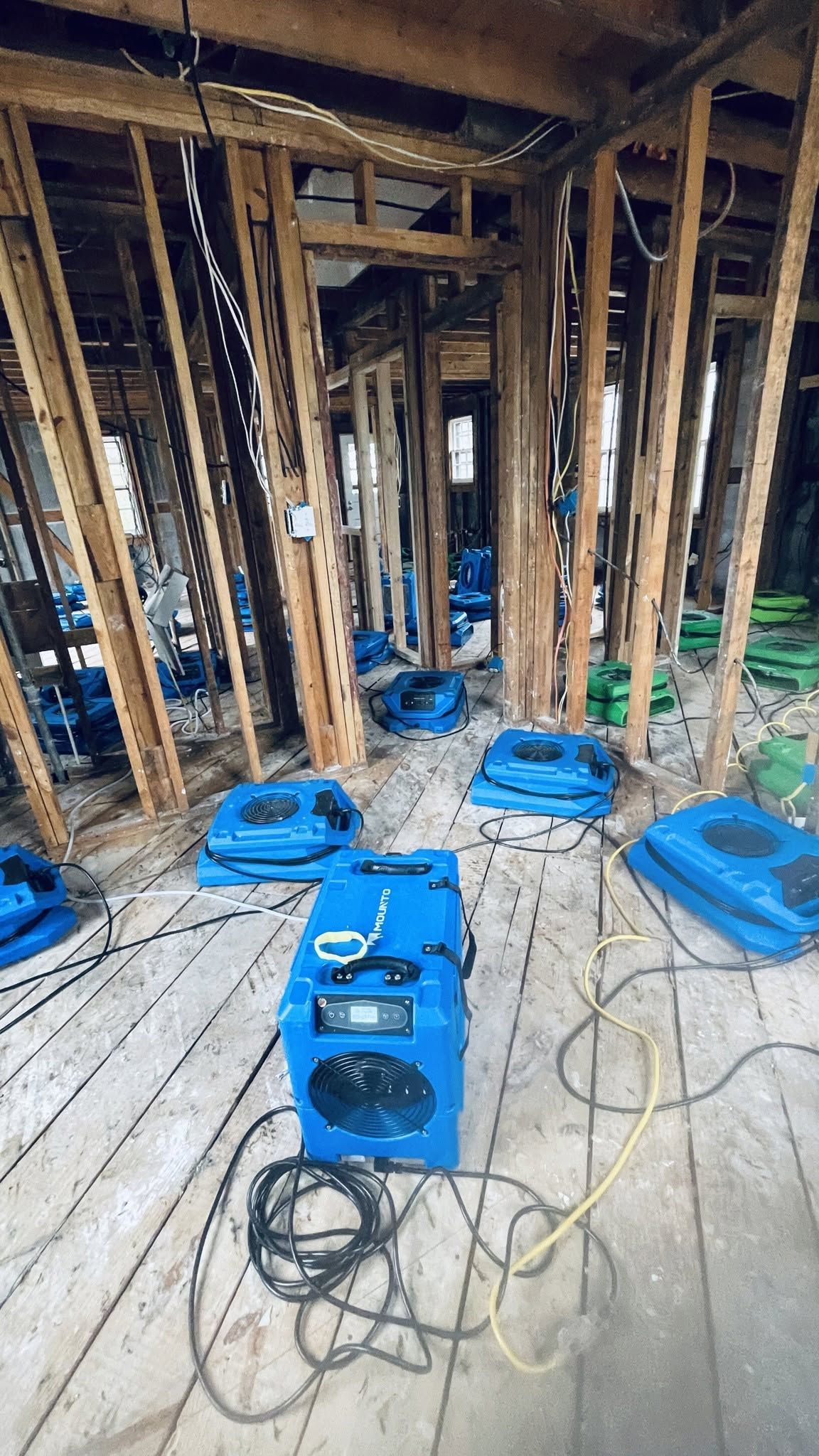
Standing water on floors is visible and immediate, but the moisture absorbed into wall cavities, subfloors, and insulation causes the lasting damage. Water wicks upward through drywall, travels horizontally along framing members, and saturates materials in rooms far from the original intrusion point. ISM Contracting removes water using extraction equipment designed for volume removal, then places commercial air movers and dehumidifiers throughout the structure while monitoring moisture levels in materials until readings return to dry standard ranges.
This process addresses both visible water and the hidden saturation inside building assemblies. Extraction pulls standing water from carpets, tile grout lines, and subfloor seams, while drying equipment creates airflow across wet surfaces and reduces humidity so moisture moves from materials into the air, where dehumidifiers capture it before it redistributes to other areas.
Request immediate water removal following any intrusion to begin drying before mold colonies establish in saturated materials.
Why Moisture Monitoring Matters During Drying
Drying requires measuring moisture content in affected materials daily, not just observing whether surfaces feel dry to the touch. Moisture meters detect saturation inside drywall and framing that remains long after surface water disappears, and readings guide equipment placement adjustments as moisture moves through the structure during the drying process.
After drying completes, you walk on floors that no longer release water when pressure is applied, walls feel firm rather than spongy when touched, and the musty odor caused by ongoing evaporation from saturated materials disappears. Humidity in the structure returns to levels that prevent mold growth, typically below 60 percent relative humidity in Nashville's climate where outdoor moisture can slow drying if not controlled with dehumidification.
Drying duration depends on the volume of water introduced, whether insulation inside walls retained moisture, and how quickly the process started after the water event. Materials like hardwood flooring and plaster require longer drying periods than standard drywall and carpet padding.


Common Questions About Water Removal
Water intrusion creates concerns about permanent damage, and understanding what extraction and drying accomplish helps property owners recognize when professional intervention prevents loss versus when materials already require replacement.
What happens if drying starts several days after water intrusion?
Delayed drying increases the likelihood that mold growth begins, materials like drywall lose structural integrity from prolonged saturation, and adhesives holding flooring and baseboards fail, which often means more materials require replacement rather than drying in place.
How do air movers differ from regular fans?
Commercial air movers produce focused, high-velocity airflow positioned at specific angles to create evaporation across wet surfaces, whereas household fans simply circulate air without the velocity or positioning needed to drive moisture from materials into the air space where dehumidifiers can capture it.
When is extraction alone insufficient without drying equipment?
Extraction removes standing water from surfaces but leaves materials still saturated, so drying equipment is necessary whenever water penetrated porous materials like drywall, insulation, carpet padding, or subfloors rather than just sitting on non-porous surfaces like sealed concrete.
What moisture readings indicate a structure is dry?
Moisture content below 15 percent in wood framing and subfloors, and below 1 percent in drywall, typically indicate drying is complete, though targets vary based on material type and Nashville's ambient humidity conditions during different seasons.
How does dehumidification speed the drying process?
Dehumidifiers remove moisture from the air, which allows saturated materials to continue releasing moisture rather than reaching equilibrium where evaporation stops because surrounding air is already saturated, particularly important in enclosed spaces where humidity would otherwise climb above 80 percent during active drying.
ISM Contracting serves residential properties, commercial facilities, and investment properties throughout Nashville where water intrusion requires immediate response. Arrange an on-site assessment within hours of discovering water damage to begin extraction and establish a drying plan based on affected materials and saturation extent.